How chatbots are changing the travel industry?
Research showed that online travel sales will soon have the largest share of all travel sales and a quarter of all bookings will be made via mobile. Considering that society has recently become incredibly tech savvy with online services, this sounds more than relevant.
Messaging is a core mobile feature. We do all sorts of things on mobile phones and chit chat about them simultaneously. These conversations have already become a major part of any user experience. And that’s when chatbots take the stage: providing your prospects, leads, and customers with a time-saving and hassle-free service.
Well-crafted and smart travel chatbots will always outperform mobile apps because:
they don’t interrupt the messaging experience;
they don’t need to be installed and don’t take up space;
they have a familiar chat interface;
they are cheap to build and maintain.
So if you are still wondering how chatbots are changing the travel industry, we’ll answer: dramatically! Now let’s look at how this translates into making money.
Travel industry chatbots help generate, nurture, and convert leads
Leisure traveling is an industry with a long purchasing cycle. People don’t go on vacation every week and every decision takes time. Customers search, read reviews, compare, and ask for advice, visiting lots of websites along the way. Chatbots can make this routine enjoyable, nurturing your leads with inspirational tips and showing them the best deals.
Travel industry chatbots ensure ultimate customer service
Besides bringing in customers, chatbots in the travel industry can help you continue engaging with current customers by providing timely and friendly customer service.
It goes without saying that human interaction is key, especially when there is a serious service issue. A chatbot can help your customer service agents deal with such cases, sparing them from answering basic frequently asked questions over and over.
So, don’t be afraid that chatbots will irritate your customers. According to the conversational marketing report by Drift, most people primarily view chatbots as a solution for getting answers.
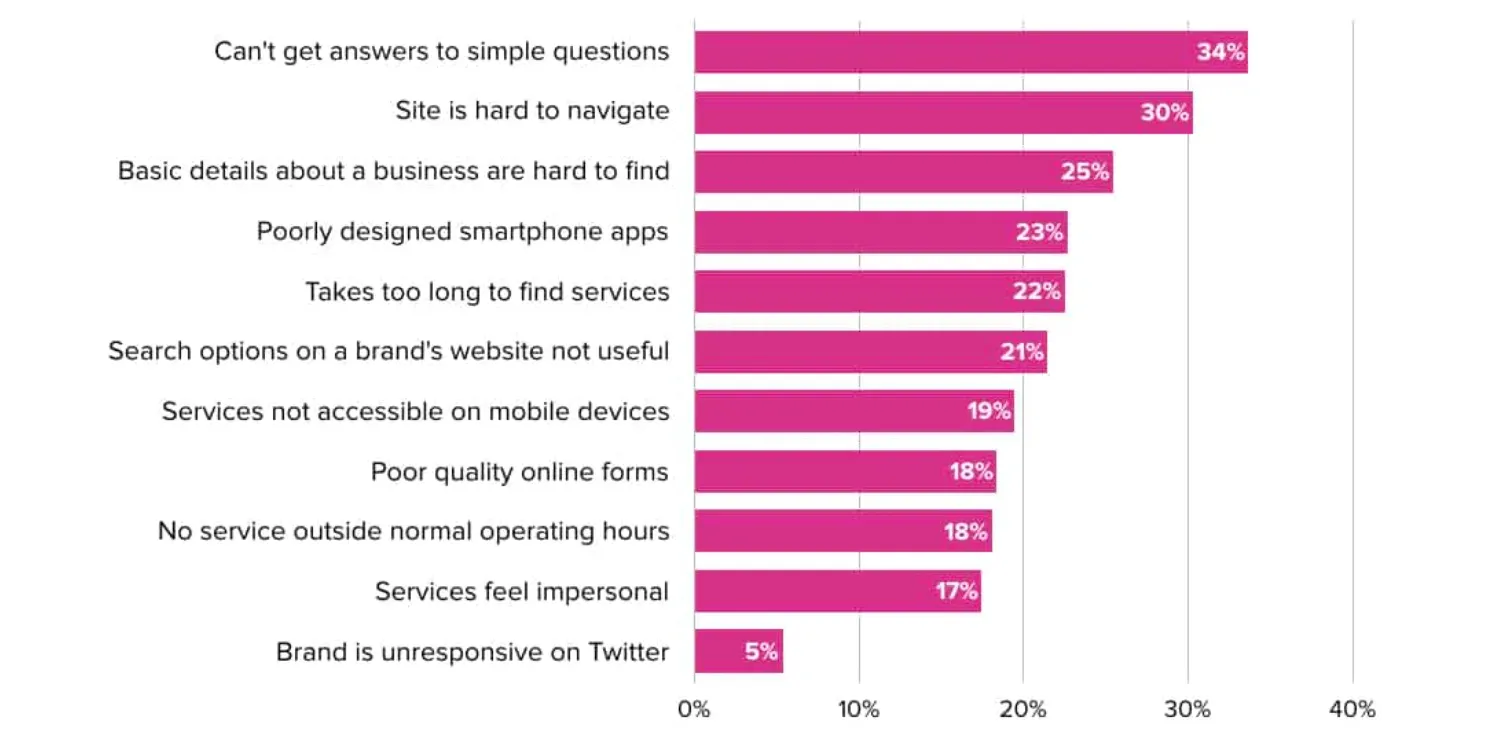
In the worst cases, chatbots can always transfer the client to a customer service agent. The best part about chatbots is that they are available 24/7 and can answer any inquiry beyond the office hours. Just imagine how many simple queries can be filtered out!
As you see, chatbots for the travel industry can be a magic wand: gaining customers and saving you time and money. Ready to try one? Grab some working scenarios with tips and examples to map out your strategy.
Scenarios, tips, and examples for building a travel chatbot
Here are some most commonly used scenarios for chatbots in the travel industry to inspire you.
Local insider: providing tips and busting myths
You can use chatbots to inform and educate your customers on a variety of subjects:
destination overviews and the best tours for a specific season;
places of interest, city and hotel highlights;
tips on how to get ready for a specific trip;
available activities, from outside yoga to laser tag;
best deals and price alerts.
Getting back to the COVID outbreak, a chatbot can provide information on when a country of destination opens and what kind of restrictions exist for tourists. There is a lot of misleading information and myths around the situation, so this can be a helping hand.
There is already a variety of such chatbots the hospitality industry can offer. For instance, the Telegram bot, @hotelhuntbot, will watch the prices for a hotel you would like to stay at and send alerts if they change. The only thing you have to do is send a link to the hotel’s page on Booking.com.
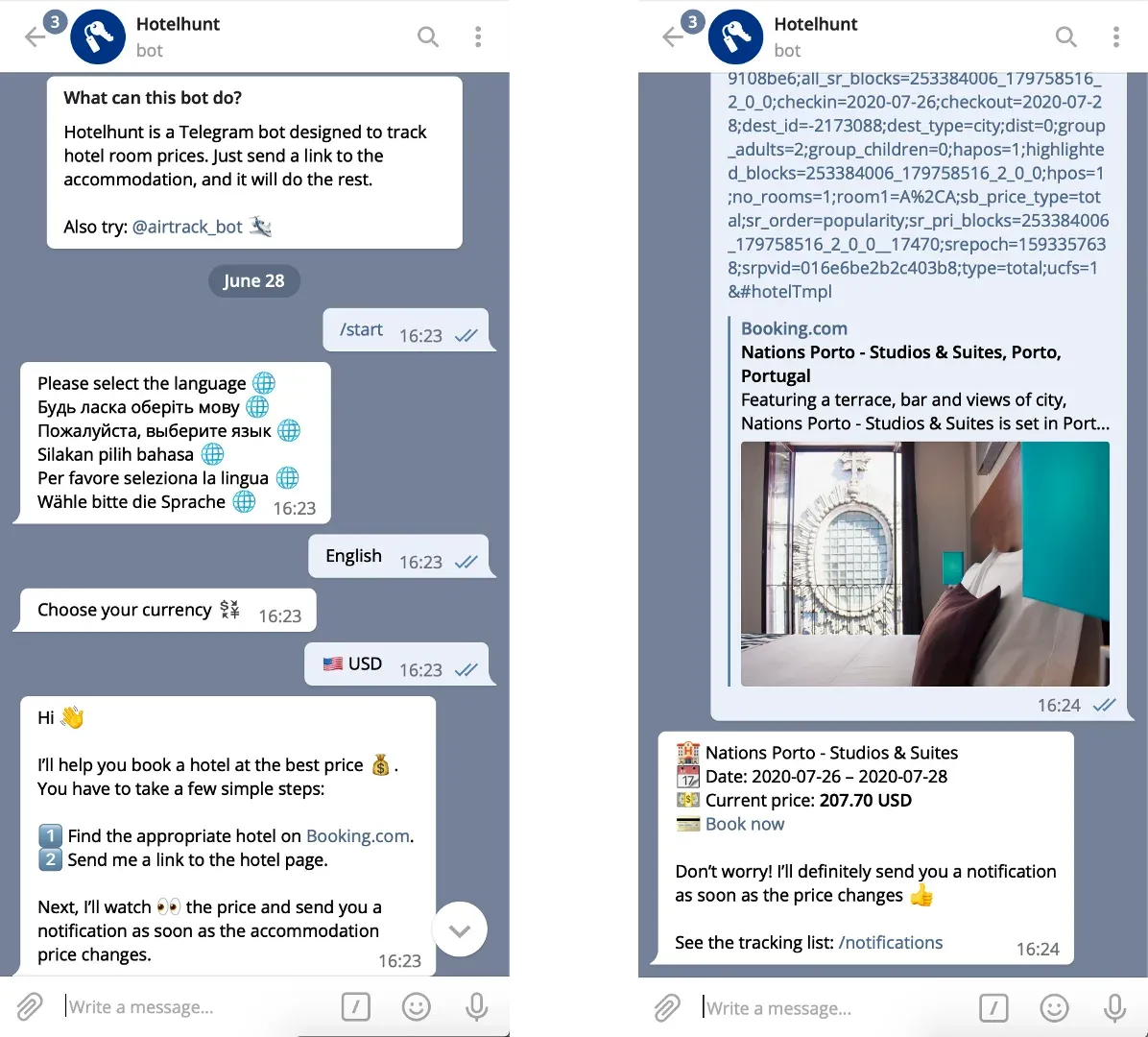
Needless to say that this type of chatbot can help you nurture and convert leads better. A bot like this can also contribute to customer loyalty. By providing travelers with valuable information, you show that you care about their experience, not the money.
Tip: To give a perfect tip, program your chatbot to ask questions first. This way, you’ll get a better chance to hit the nail on the head and offer a really valuable piece of advice.
Flight and hotel booking assistant
These chatbots can facilitate a simple user experience, helping them to make a booking without filling out forms or browsing through aggregators that are usually overloaded with ads and banners. Apart from making reservations, travelers can change or cancel them.
24/7 customer service agent
Answering simple questions is the number one task a chatbot can spare you from.
Here are some other things travel industry chatbots can do in terms of customer service:
manage bookings;
restore passwords;
resend confirmations;
collect feedback and ask for guest reviews;
guide users through the cancelation and compensation process.
Tip: Give your chatbot a personality, give it a name, and set a tone of voice. Stay relevant to your brand and the audience segment you are targeting. For instance, if you own a five-star boutique hotel, it could be an online concierge giving sophisticated advice and suggesting attractions based on the guest’s interests.