Chatbots are becoming more and more popular. In addition, they are evolving as a technology. Online businesses use them as a tool for working with clients: they help maintain existing users and attract new ones.
In this article we compare two tools: chatbots and the usual lead forms on the site, and understand which one of them works better and in which situations.
Lead-forms conversion is about 21%
Are you paying attention to lead forms? Many marketers think that users don't respond to lead-forms and other static banners at all, but just flip through them. Is this true?
The news publication Adotas in its study claims that 86% of users simply don't notice static forms for lead generation. What's more, supposedly you have a better chance of surviving a plane crash than clicking on a link in a banner.
Why is this so? There are many versions.
First of all, banners are static. As a rule, they cannot be personalized, the content of the banners does not depend on the user's request.
Another version is that users read "diagonally", run their eyes over the text. They are looking for information that might be relevant to their query, and do not pay attention to everything else. Therefore, lead-forms can go unheeded and not bring in the desired conversions.
However, lead form conversions are about 21%.
This is an average for all industries, so it may be different for your type of product. What do you think? That's not too bad.
Now let's deal with the chatbots.
Myth about "intrusive bots": only 9% of users refuse to dialog with a chatbot
Many people consider chatbots a very intrusive tool.
But look at the statistics. Userlike did a study and found out how users feel about chatbots. According to the statistics, people willingly communicate with chatbots and don't think it's weird:
Userlike survey results: only 9% of users refuse to dialog with chatbots and think companies shouldn't use them
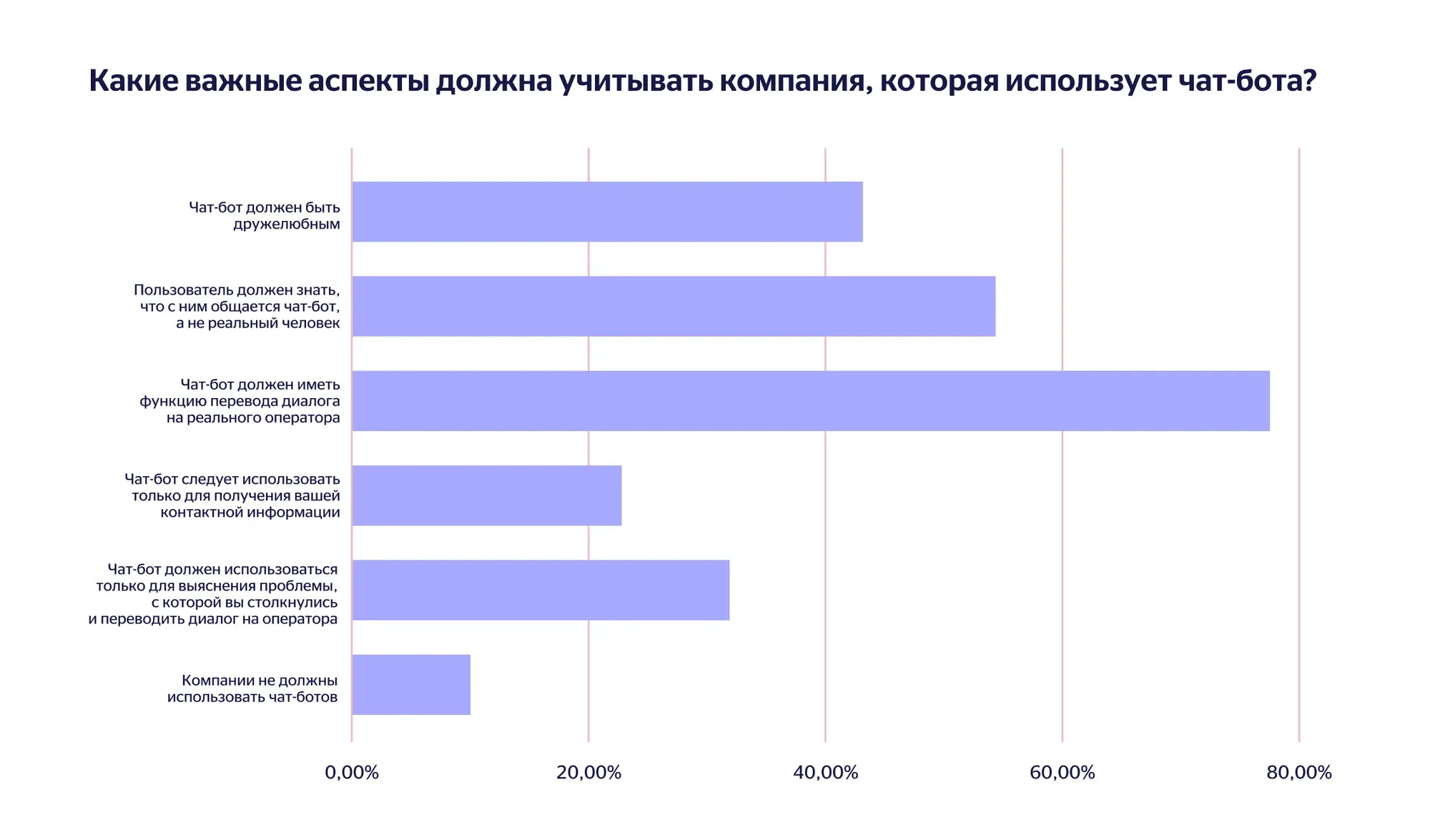
Only 9% of users refuse to dialog with a chatbot and think companies shouldn't use them. At the same time, almost 80% say that the chatbot should let you know that you are talking to a chatbot.
This is an important point: You can use a chatbot, but you shouldn't pass it off as a real person. We've already written tips for setting up a chatbot. Study and set up the bot so that it only brings in quality leads.
Involvement statistics for chatbots: Users complete the target action 70% of the time
And one more fact about chatbots:
Users end the conversation with 70% of the chatbots they launch.
This means that 70% of the time, users complete the targeted action you intended for the bot.
Lead generation: chat and chatbots outperform lead forms by more than 10 percentage points
According to a recent statistic, 36% of businesses use chatbots primarily as a lead generation tool. The chatbot attracts users, and they, in turn, share their contacts.
According to Userlike research, more than 60% of users think a chatbot should be able to redirect the dialog to a support operator
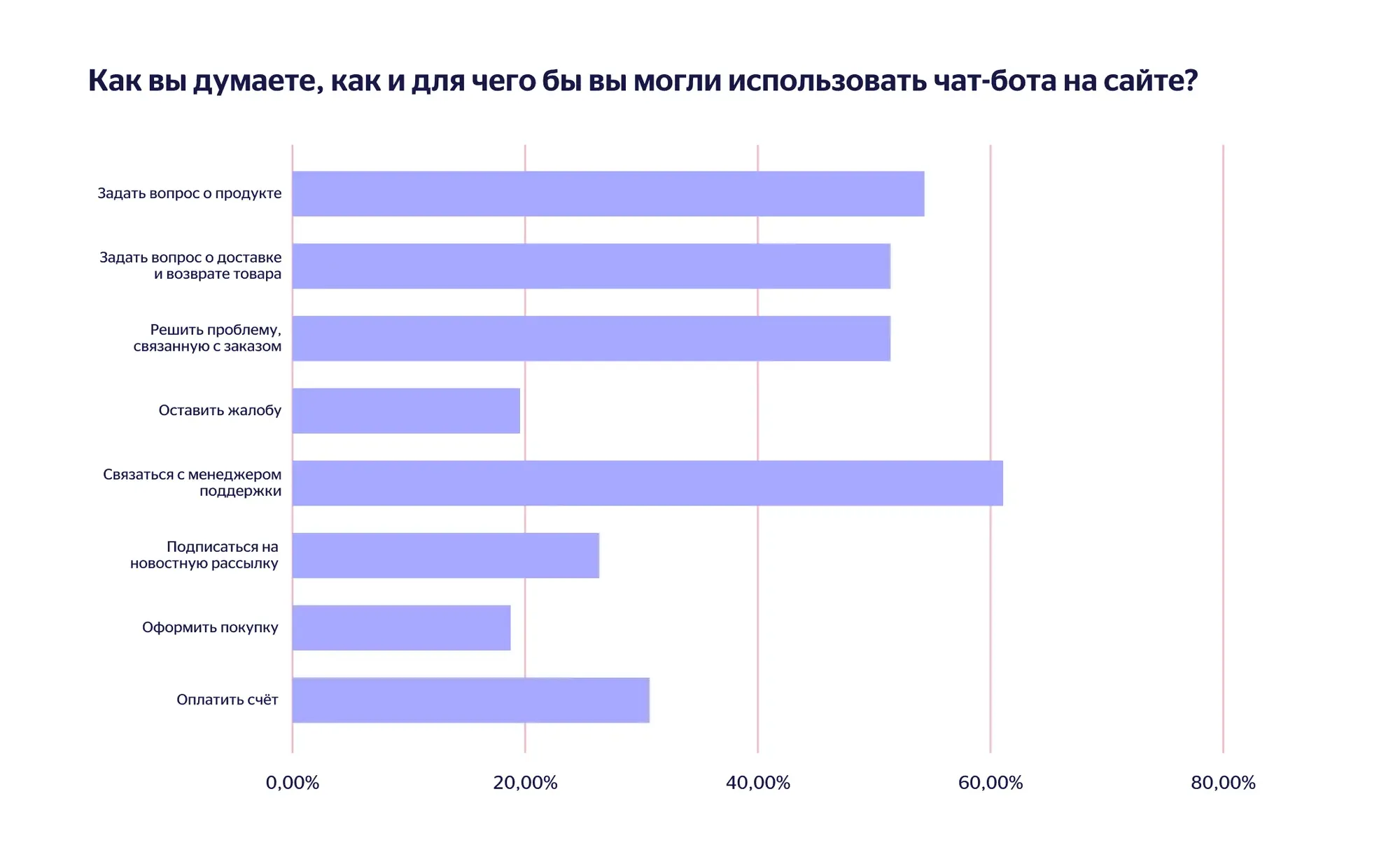
As you can see, chat and chatbots for the site are more attractive tools compared to static forms for collecting leads.
The difference between 70% and 21% is obvious.
Lead generation in different segments
Tidio has collected some interesting statistics about the use of chatbots in different areas.
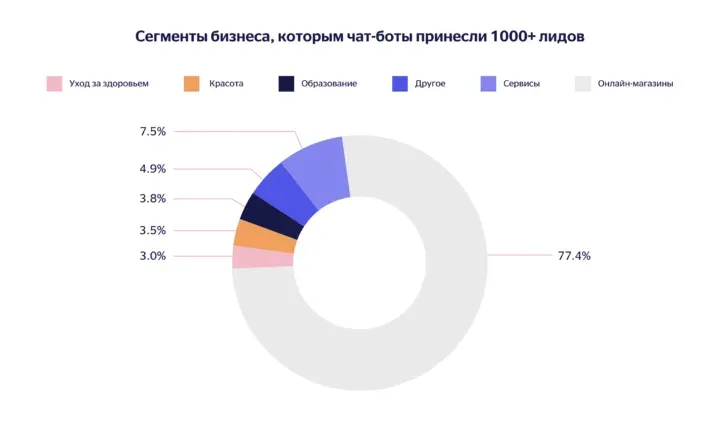
As it turns out, chatbots are used most often in ecommerce. This is understandable - online stores have many inquiries about placing orders, delivery, the cost of goods. Many stores also use the bot to generate leads - the user's email can easily be exchanged for a small discount.
Efficiency for business: 26% of the companies chatbots helped to collect more leads
Imagine the situation: a magical lead form is installed on your site. It attracts only hot leads and has a huge conversion rate - about 90% of users leave requests to demonstrate the service. But there is one "but".
Sales managers don't have time to respond at all. Or they do, but slowly - users have to wait several days for an answer. During this time they have time to forget that they left their contact, and their desire to use your product naturally decreases.
Have you imagined it? We don't have to imagine. This is not a fantasy, but a very real situation that happens in many companies. More than half of the companies respond to users within five days or more. And now imagine how many deals they could have closed, but have not closed because they collect leads manually.
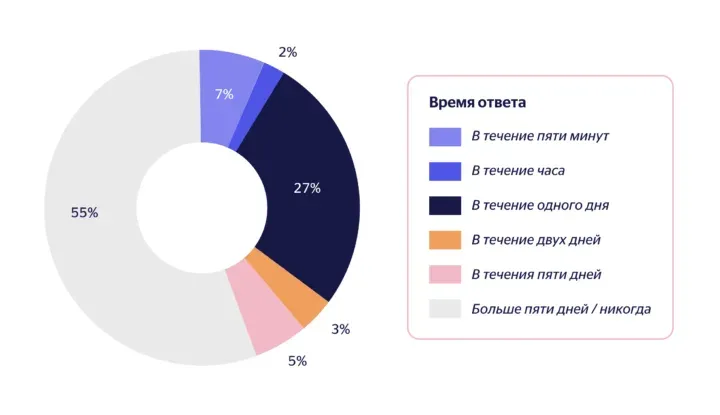
Speed of processing lead forms from Drift
The chatbot definitely solves this problem. It qualifies users, answers questions, and, if necessary, redirects the dialogue to an operator. And here's the data on how the introduction of the chatbot has affected the metrics:
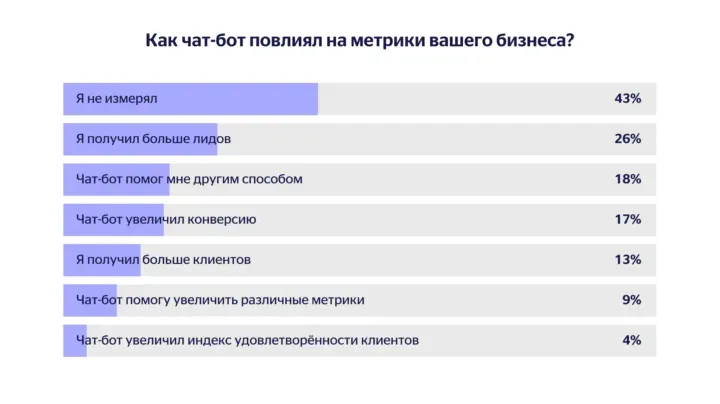
According to Tidio results, 26% of users who activated the chatbot said that it helped them collect more leads, and 17% said it helped them increase conversion rates
The main advantage of a chatbot is that it can be set up so that users don't have to enter answers to questions manually. They can simply click the buttons. Buttons make it much easier to gather the necessary information about the user and not annoy them.
You can have a cool team, but even it sometimes misses requests from lead forms. A chatbot prevents these risks.
The chatbot brings in better quality leads and qualifies them independently, which is great!
Taking care of the user
According to the above statistics, chatbots seem to be a better solution for attracting leads than lead forms. But is this true on the user-care side?
Chatbots can be really useful if you need to collect a lot of data about a potential customer. It's easier to do this in a conversational form, albeit with an unreal interlocutor. If you need an email address, phone number, full name and date of birth, use a chatbot. A lead form with so many fields to fill in will scare the user. Most likely, they will just close it.