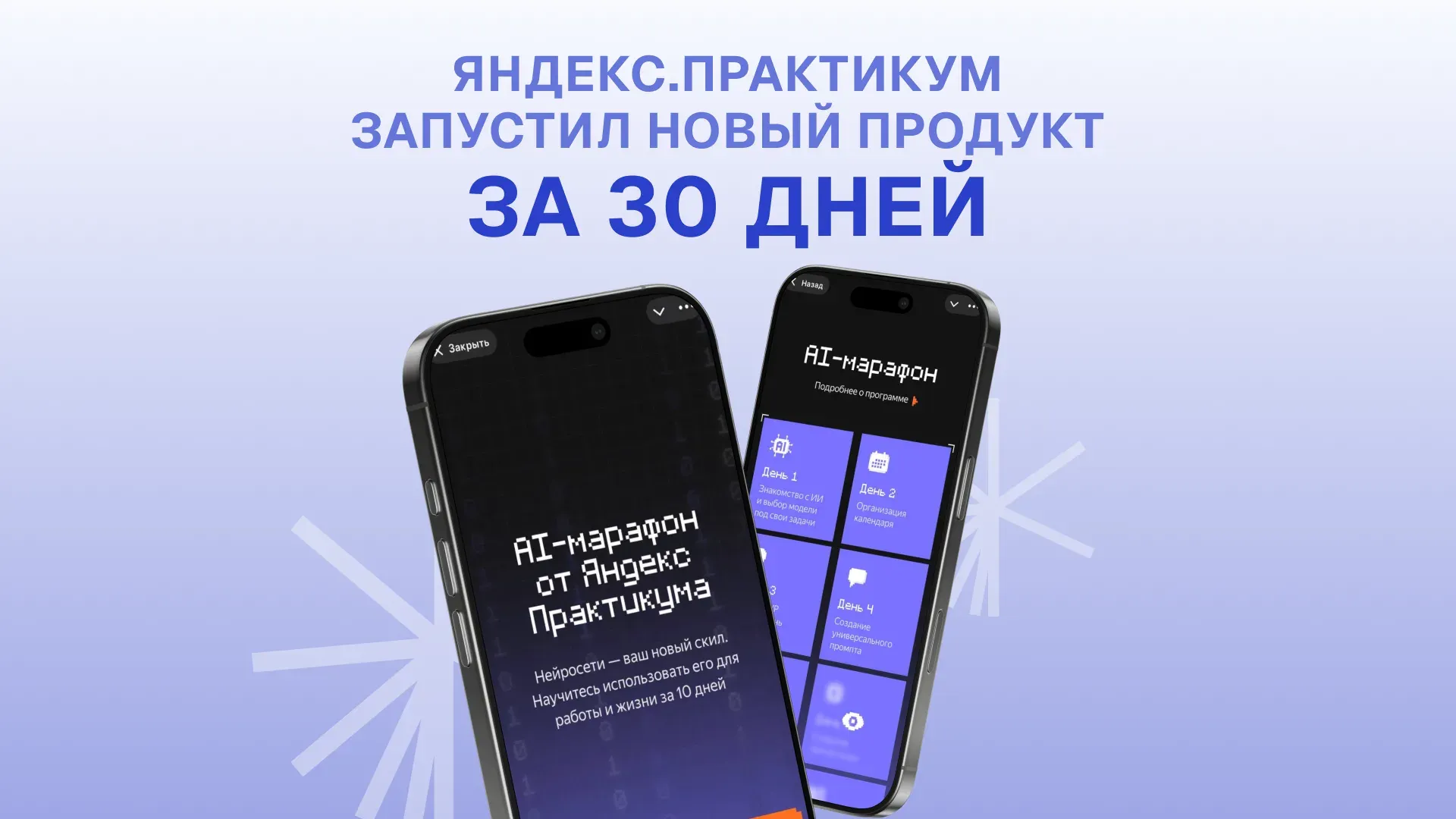
Yandex Practicum is Yandex's educational platform that teaches digital professions, from data analytics to software development. One of the team's products is a line of free introductory courses that introduce a wide audience to new technologies, particularly neural networks.
What was the challenge?
The Yandex Practicum team didn't just want to tell people about neural networks; they wanted to create a product where users would try things themselves and realize they need it. Traditional advertising couldn't do this: a person sees an ad and leaves, leaving behind no engagement, no data, and no next step.
They needed a format that:
holds attention beyond a single touchpoint.
lets them track each user's progress day by day.
doesn't require people to download a separate app or sign up on a complicated platform.
The Yandex Practicum team had one month to launch the educational product. In that time, they had to prepare the curriculum, design the learning path, set up the bot, and put the course together without a separate app.
Why a Telegram bot and a mini app?
A website is a one-time visit. An email is a letter that's easy to lose among dozens of others. A bot, on the other hand, lives in the same feed as the user's friends and family, and stays in touch for as long as needed.
This opens up opportunities other channels don't offer:
Gamification — achievements and rewards for completing course days.
Push notifications — unobtrusive reminders that arrive as a personal message rather than spam.
Personalization — the bot remembers each user's progress and answers and adapts to them.
In effect, one bot replaced several systems at once: a website (information), email (notifications), social media (engagement), an LMS (learning), and a mobile app (gamification).
What was done
The project was built on several key mechanics of the puzzlebot Constructor:
Scenario — course materials were unlocked gradually, one day at a time, creating a sense of step-by-step learning rather than a one-off content dump.
Conditions — depending on how many lessons they had completed, users saw a different menu reflecting their personal progress.
Push notifications — creative formats were designed for reminders about unfinished assignments and announcements of upcoming activities.
Mini app — the team built a complex backend without code, fully integrating the design system and materials provided by Yandex Practicum into the app.
The client provided the design and content, and the team focused on the technical implementation: from the mini app mockup to final testing of the finished product.
Only a month passed from idea to launch.
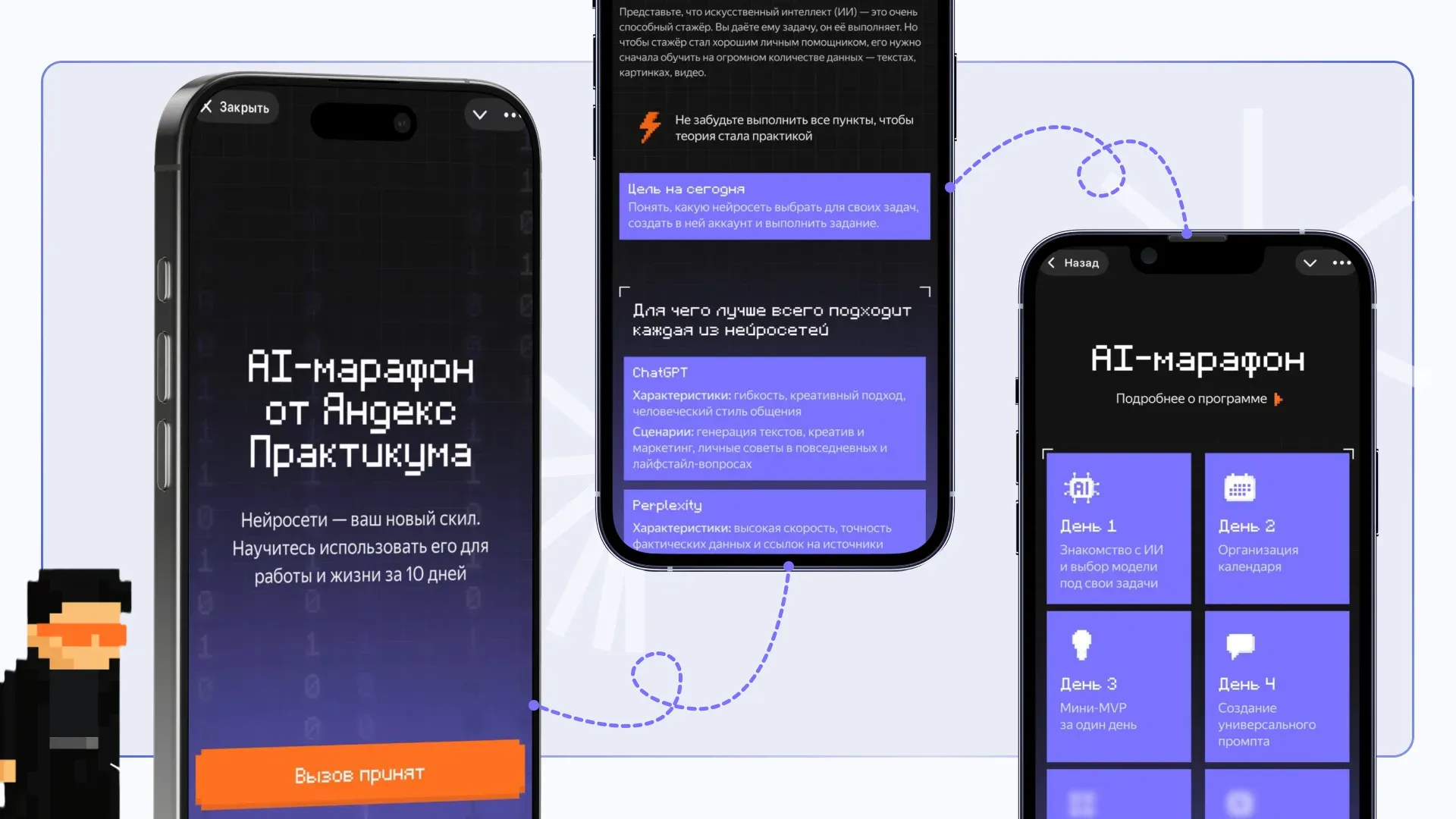
App demo
The mini app brought together in one interface:
daily delivery of learning materials according to the scenario.
a visual progress tracker that changes as the user completes lessons.
a system of achievements for completed days.
push notifications reminding users to get back to their studies.
All of this works inside Telegram — users just open the chat to find themselves in the learning process, with no extra apps to install and no redirects to external websites.
Fun fact: the project uses AI
In puzzlebot, you can connect AI to individual stages of a scenario. For example, a bot can process free-form answers, answer questions, or suggest the user's next step.
In this course, the neural network serves two purposes. First, participants learn to work with neural networks and use them to create bots. If needed, AI can also be added inside the bot itself — to check answers, give hints, or hold a conversation with the user.
Result
Yandex Practicum moved hands-on learning into a messenger and launched a course on puzzlebot in a month. The team can change the materials and scenario on its own, without waiting for app updates.
This case shows something very practical: if a curriculum is already in place, it can be turned into a bot in a short time. puzzlebot helps keep the scenario, content, and automation in one place and run courses in Telegram, MAX, or on both platforms.